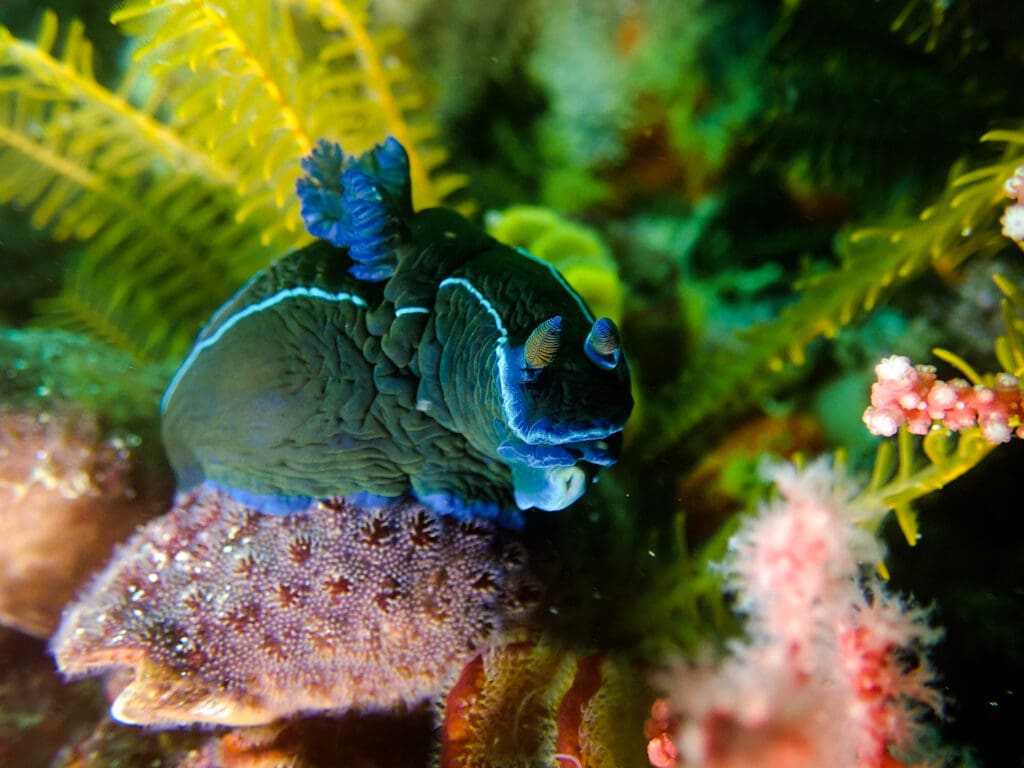
As is so often the case in nature, the beauty of nudibranchs lies in the details. These tiny, shellless mollusks are members of the sea slug family — and among the most fascinating small sea creatures around. Typically, they measure between 0.15 and 24 inches (4–600 millimetres). Despite their small size, they display some of Mother Nature’s most captivating colours, intricate patterns, and bizarre shapes — in extraordinary diversity.
Biologists have identified around 2,000 species of nudibranchs worldwide. They inhabit oceans from the tropics to the poles, thriving in both deep seas and shallow coastal waters. In South Africa alone, scientists have recorded over 800 species of these spectacular sea slugs.
More than 75 endemic species inhabit False Bay, the largest neighbouring bay to where we operate our Marine Volunteer Programme. Figures for nudibranch diversity in our immediate region are undocumented, but most experts believe it supports a similar abundance and range. Many of these species are endemic, found nowhere else on Earth.
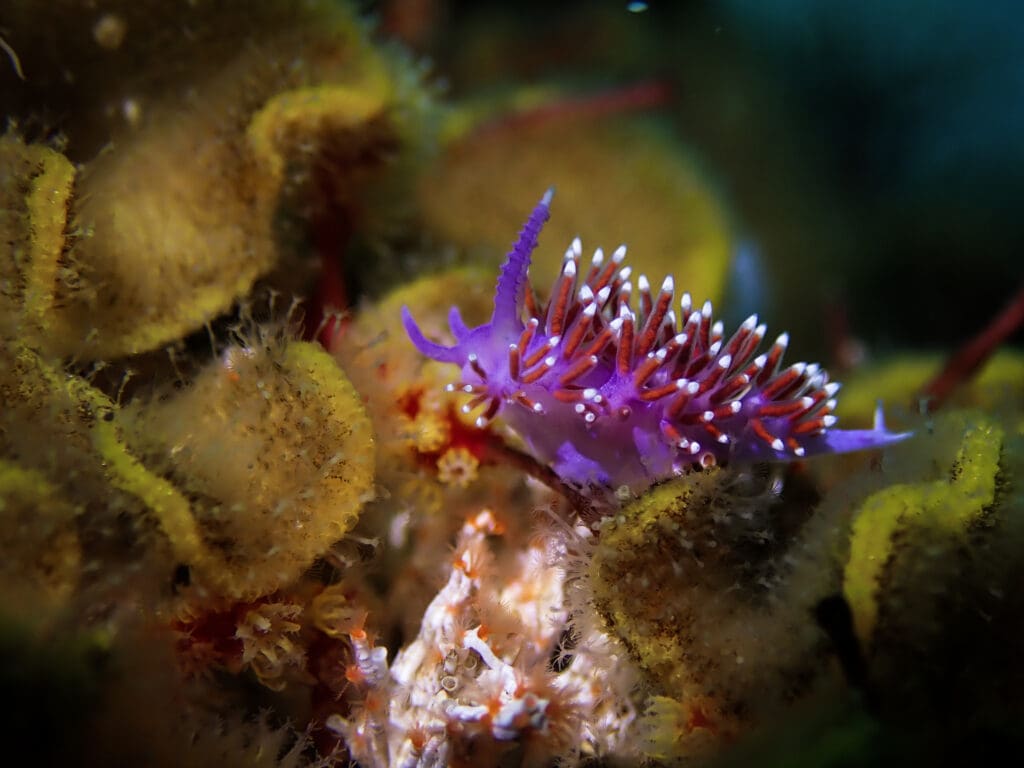
Scientists believe nudibranchs first appeared around 100 million years ago. Early in their evolution, they abandoned their shells — a costly feature to produce, since it requires large amounts of calcium carbonate and energy. Instead, they developed ingenious new biological protection strategies that allowed for greater flexibility, agility, and efficiency.
These evolutionary innovations gave rise to their extraordinary variety of colours and forms. Nudibranchs’ dazzling hues, striking patterns, and unusual appendages serve multiple purposes — from digestion and breathing to camouflage and defence.
Defence Mechanisms
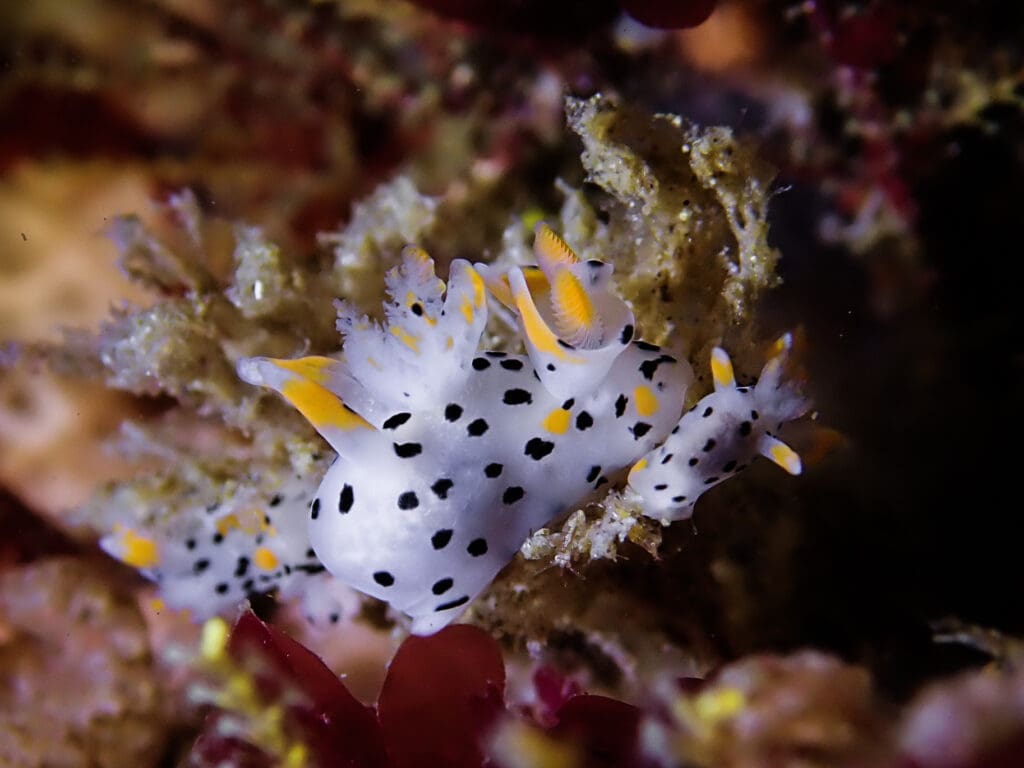
Some of the frilly or spike-like projections from these sea slugs can be venomous to potential predators. Nudibranchs don’t rely on speed or strength to stay alive — instead, they have developed some of the most sophisticated chemical defence strategies in the marine world.
One of the most remarkable adaptations among nudibranchs is their ability to consume toxic prey — such as jellyfish, anemones, or sponges — without suffering any ill effects. Even more astonishingly, some species can absorb the stinging cells (called nematocysts) from their prey and store them for their own defence. These immature stinging cells travel through the nudibranch’s body to the tips of the cerata (those feathery extensions on their backs), where they mature and remain “loaded” until needed.
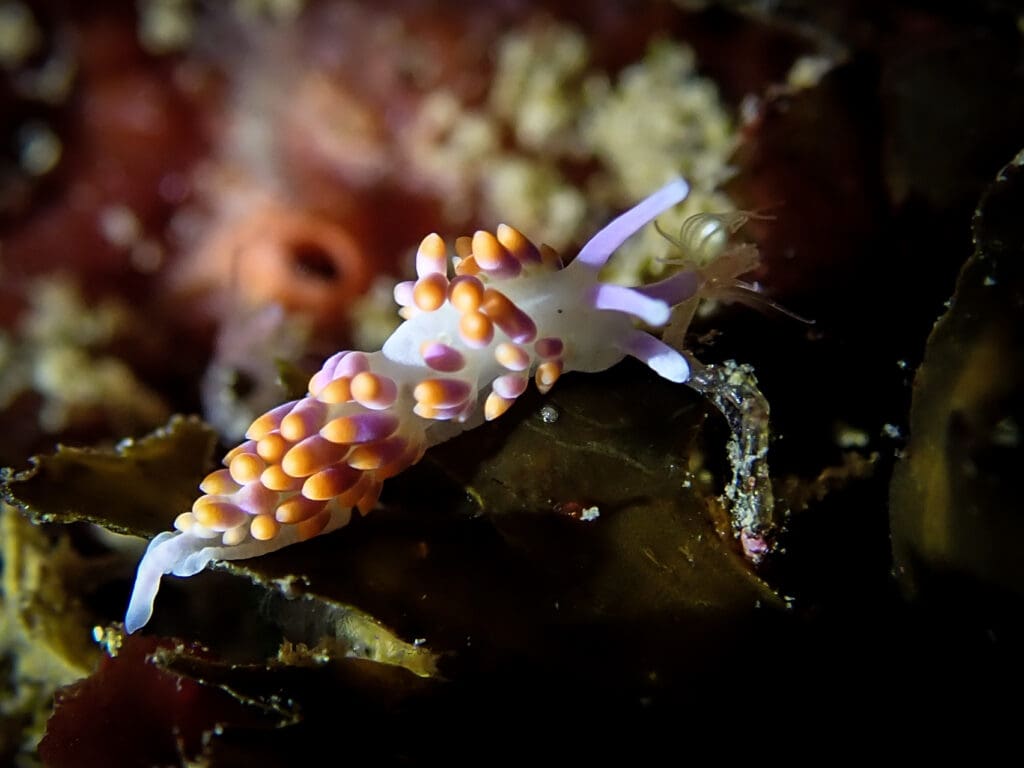
When threatened, the nudibranch can then deploy these stolen weapons — a remarkable energy-saving strategy that replaces the need to produce its own toxins or a protective shell. One of the most eye-catching examples is the gas-flame nudibranch (Bonisa nakaza). This Cape endemic species has fiery cerata that look like glowing embers drifting through the kelp. They serve as a warning to potential predators of their poisonous nature.
In other species, the strategy is slightly different. This fact is particularly true of Doridoidea. Otherwise known as Dorid nudibranchs, they are a major group of nudibranchs whose gills form a little feathery rosette on their backs (near the rear end of the body), rather than having long cerata along their sides. Instead of stealing stinging cells, they store toxic terpenoids from the sponges they feed on, concentrating these chemicals within their skin. Terpenoids are naturally occurring chemical compounds made by many marine organisms (and land plants). They often function as toxic or unpalatable chemical signals, making them taste foul or even poisonous to predators. In those cases, a single bite is usually enough to teach a predator a swift lesson — and the nudibranch earns its survival simply by being too unpleasant, or too dangerous, to swallow. Their brilliant colours and bold patterns are often a visual warning of these chemical defences — a neon billboard that says: ‘don’t even try’.
Rhinophores
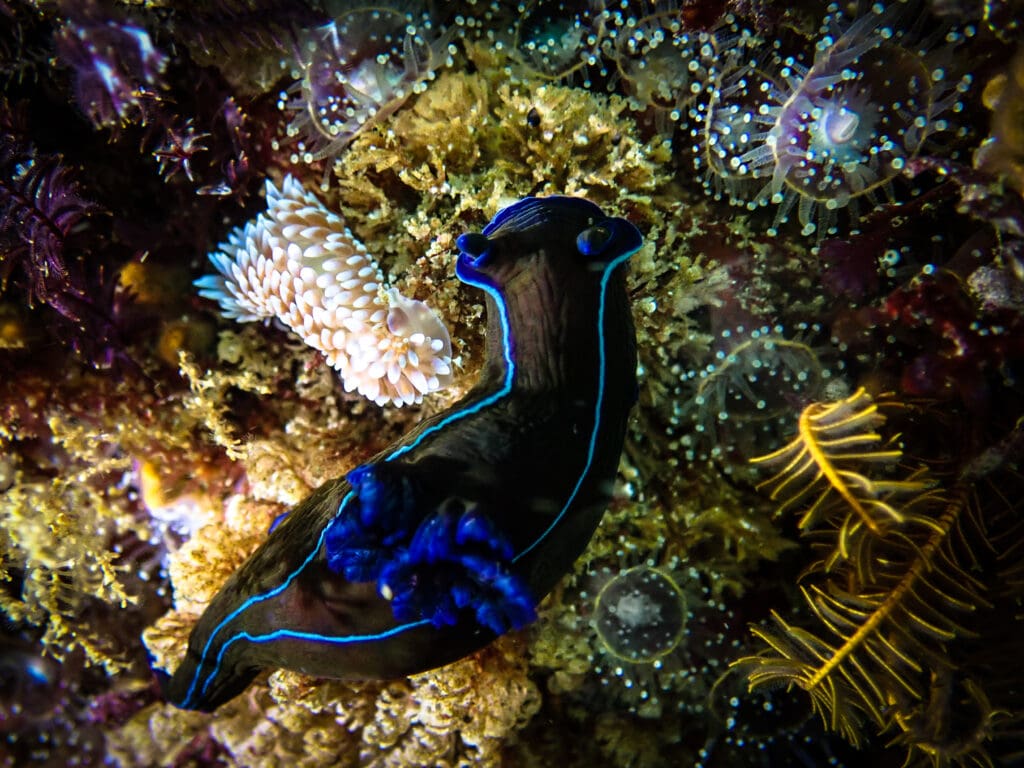
Nudibranchs don’t have eyes like ours, so they rely on a pair of highly sensitive rhinophores — horn-like structures on their heads — to sense their environment. These organs detect chemical signals in the water, allowing the nudibranch to “smell” its surroundings, locate food, and find potential mates. Each species’ rhinophores are uniquely shaped, often resembling antennae or feathery plumes, and are so delicate that some nudibranchs can retract them for protection.
Colour and Camouflage
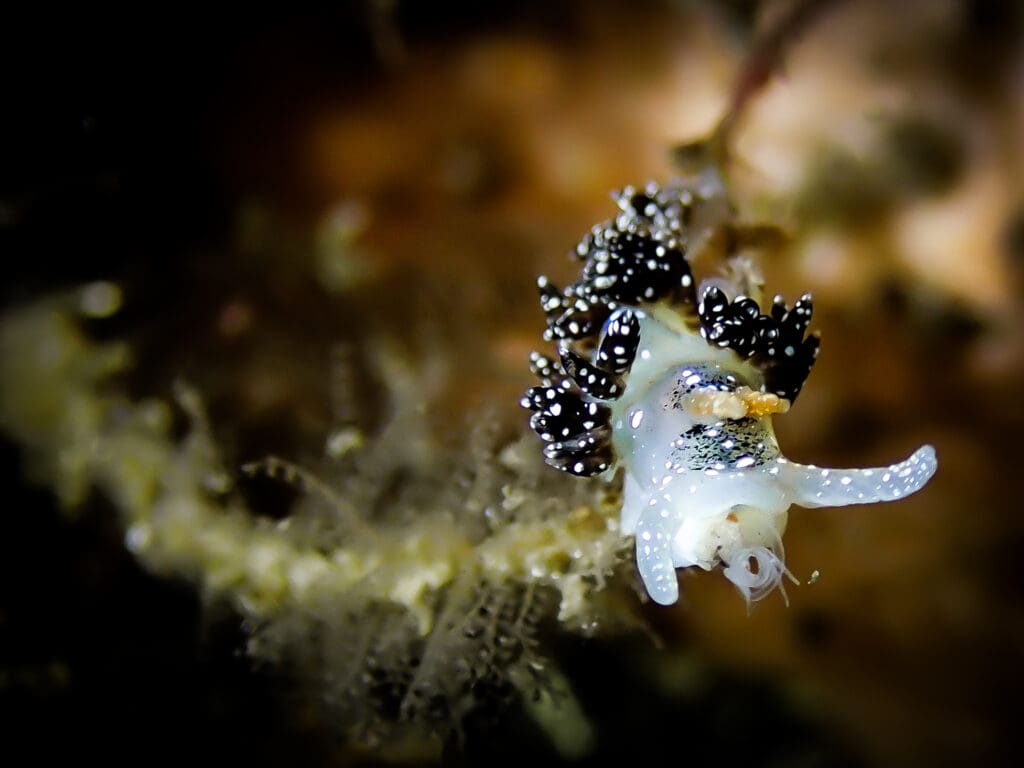
Many nudibranchs produce or absorb terpenoids, chemical compounds derived from their prey that can make them toxic or distasteful. These compounds often contribute to their vivid colouration — a biological warning known as aposematism. To us, these colours look like a painter’s dream, but to predators, they signal “danger: don’t eat me.”
However, not all nudibranchs flaunt bright colours. Some species have evolved subtle hues and patterns that perfectly mimic coral, sponges, or algae, helping them to blend seamlessly into their surroundings. In the kaleidoscopic world beneath the waves, nudibranchs prove that beauty can be both a shield and a lure.
Reproduction
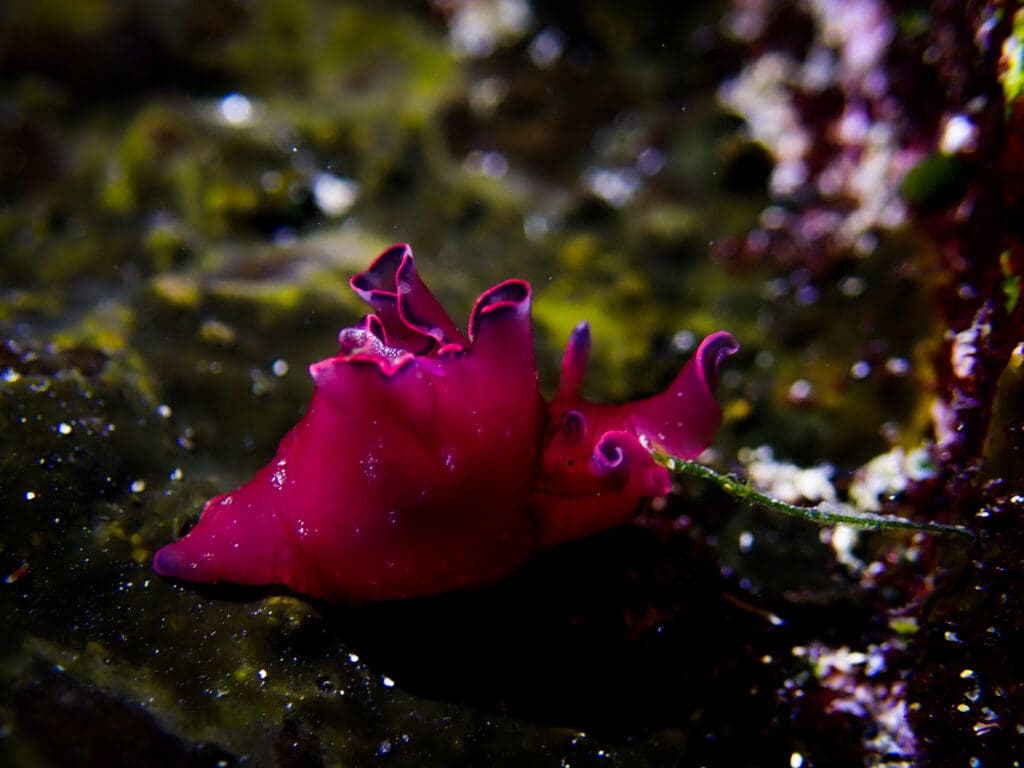
Nudibranchs are hermaphrodites, meaning each individual possesses both male and female reproductive organs. This adaptation dramatically increases their chances of reproductive success — any two nudibranchs that meet can mate.
In most cases, mating involves reciprocal copulation, where both individuals exchange sperm and later lay eggs. Depending on the species, a single nudibranch may lay anywhere from a handful of eggs to a staggering 25 million in a single ribbon-like spiral. These delicate egg ribbons often resemble intricate underwater lace — another reminder that even the smallest sea creatures can be astonishingly artistic.
Ecological Significance
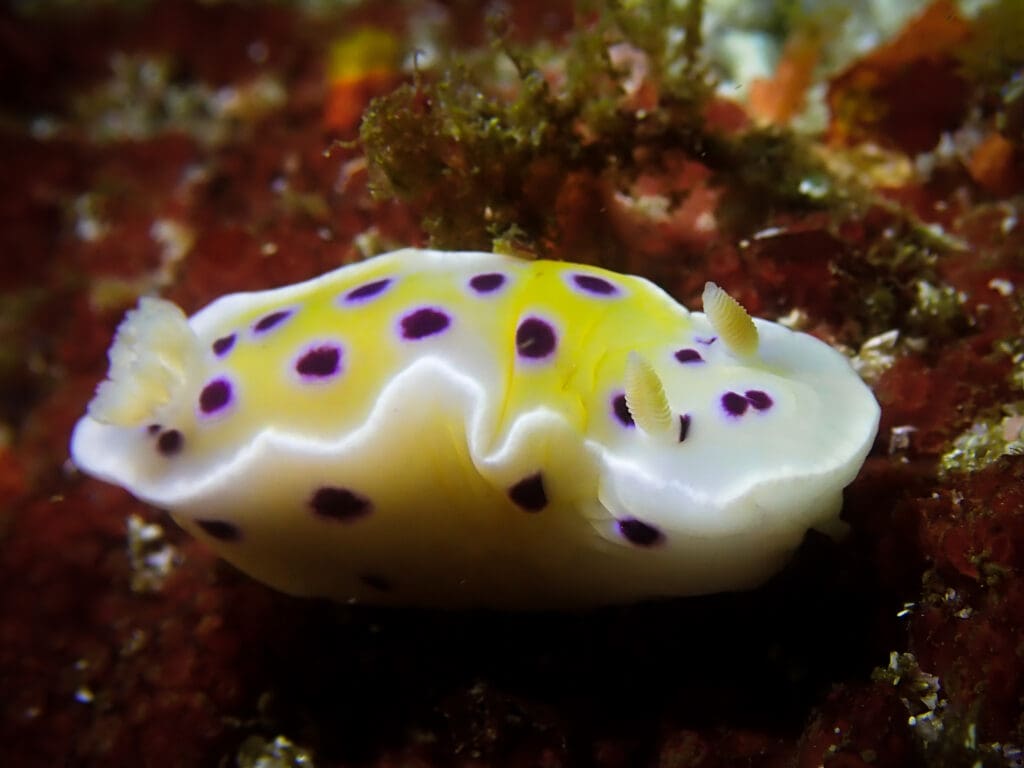
Nudibranchs are indicator species — meaning their presence and diversity reflect the health of the surrounding ecosystem. Because they are sensitive to changes in water temperature, pollution, and habitat degradation, a thriving nudibranch population often signals a balanced, biodiverse marine environment.
Most species crawl along reefs, rocks, and seaweed in search of food. Still, some have evolved the ability to float or swim gracefully through open water — a mesmerizing sight for divers lucky enough to encounter them.
From their surreal colours to their extraordinary defences, nudibranchs remind us how much creativity exists beneath the waves — and how much of the ocean’s magic hides in plain sight.
Photos by Lisa Beasley